7 Common Misconceptions About Intellectual Property
Debunk common myths and clarify key aspects of intellectual property law. Understand patents, trademarks, copyrights, and trade secrets to better protect your creations and innovations in the US and Southeast Asia.
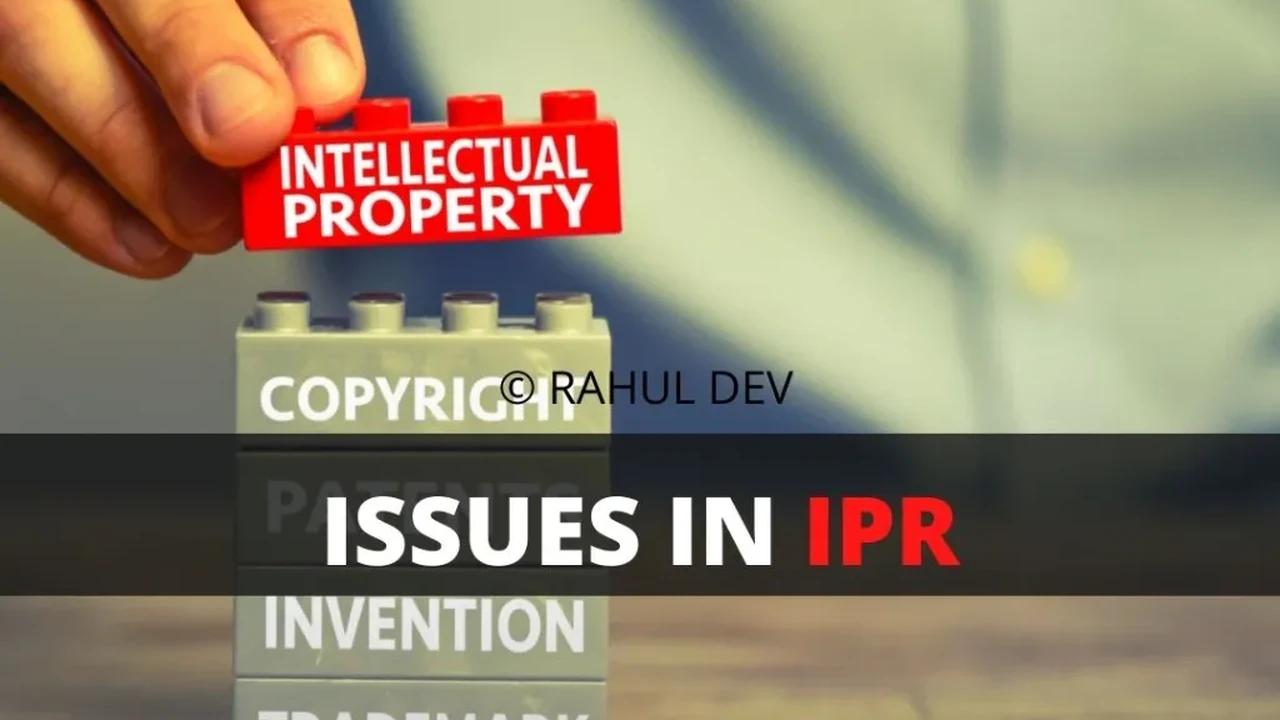
Debunk common myths and clarify key aspects of intellectual property law. Understand patents, trademarks, copyrights, and trade secrets to better protect your creations and innovations in the US and Southeast Asia.
7 Common Misconceptions About Intellectual Property
Intellectual property (IP) can feel like a complex maze, full of jargon and legal nuances. For many creators, innovators, and entrepreneurs, understanding the ins and outs of patents, trademarks, copyrights, and trade secrets is crucial for protecting their hard work and ensuring their business thrives. However, there are a lot of myths and misunderstandings floating around that can lead to costly mistakes or missed opportunities. Let's dive into seven of the most common misconceptions about intellectual property and set the record straight, with a special eye on both the US and Southeast Asian contexts.
Misconception 1 If I Create It I Automatically Own All Rights
This is perhaps the most widespread misconception, especially concerning copyright. While it's true that copyright protection generally arises automatically upon the creation of an original work of authorship fixed in a tangible medium (like writing a book, composing a song, or painting a picture), this doesn't mean you automatically own all rights, nor does it mean your protection is as robust as it could be. For instance, in the US, while you have basic copyright protection, registering your copyright with the US Copyright Office offers significant advantages. These include the ability to sue for infringement in federal court and, crucially, the possibility of recovering statutory damages and attorney's fees, which can be a game-changer in a legal battle. Without registration, you might only be able to recover actual damages, which can be much harder to prove and often less substantial.
In many Southeast Asian countries, similar principles apply. For example, in Singapore, copyright protection is automatic, but registration is not available. However, having clear documentation of creation and ownership is paramount. In countries like the Philippines, while copyright is automatic, depositing copies of the work with the National Library or Supreme Court Library can provide prima facie evidence of ownership and date of creation, which is helpful in disputes. The key takeaway here is that while automatic rights exist, proactive steps like registration (where available) or meticulous record-keeping significantly strengthen your position.
Furthermore, this misconception often overlooks the 'work for hire' doctrine. If you create something as an employee within the scope of your employment, or if you're a contractor and have signed a 'work for hire' agreement, the employer or commissioning party typically owns the copyright, not you. Always check your employment contracts or freelance agreements carefully!
Misconception 2 A Trademark Is Just a Fancy Name or Logo
Many people think a trademark is simply a company name or logo. While names and logos are indeed common types of trademarks, the concept is much broader. A trademark is any word, phrase, symbol, design, or combination thereof that identifies and distinguishes the source of goods or services of one party from those of others. This can include sounds (like the Netflix 'ta-dum' sound), colors (like Tiffany blue), scents, and even product packaging or configurations (known as trade dress).
The purpose of a trademark is to prevent consumer confusion. When you see the Nike 'swoosh,' you instantly associate it with athletic wear from Nike. If another company used a similar swoosh for shoes, consumers might mistakenly believe it's also from Nike, which is what trademark law aims to prevent.
Just like copyright, while you might gain some 'common law' trademark rights simply by using a mark in commerce, registering your trademark with the relevant government office (like the USPTO in the US or IPOS in Singapore) provides nationwide (or country-wide) protection, public notice of your claim, and the ability to use the ® symbol. This makes enforcement much easier and deters potential infringers.
Consider the differences: In the US, federal registration gives you rights across all states. In Southeast Asia, each country has its own trademark office (e.g., MyIPO in Malaysia, DITP in Thailand). If you operate across multiple SEA countries, you'll need to register in each jurisdiction or consider international filing systems like the Madrid Protocol, which simplifies the process of applying for trademark registration in multiple countries.
Misconception 3 If It's on the Internet It's Free to Use
This is a dangerous misconception that has led to countless copyright infringement lawsuits. The internet is not a public domain free-for-all. Just because an image, article, video, or song is easily accessible online doesn't mean it's free for you to download, copy, modify, or redistribute. Most content found online is protected by copyright, and using it without permission from the copyright holder is infringement.
Think of it this way: if you walk into a bookstore, you can browse the books, but you can't just photocopy them and distribute them for free. The internet is similar. The ease of access doesn't negate ownership.
There are exceptions, of course. Content explicitly labeled as public domain, licensed under Creative Commons (with specific usage terms), or available through stock photo/video services with appropriate licenses can be used. However, you must always check the terms of use. Many platforms, like YouTube, have strict policies regarding copyrighted music or video clips, and using them without permission can lead to your content being taken down or even legal action.
Recommended Tools for Legally Sourcing Content
- Stock Photo/Video Sites:
- Shutterstock: Offers a vast library of high-quality images, videos, and music. Pricing varies from subscription plans (e.g., 10 images/month for $29 USD) to on-demand packs. Great for professional use.
- Adobe Stock: Integrates seamlessly with Adobe Creative Cloud. Similar pricing models to Shutterstock.
- Unsplash: Provides high-resolution photos for free under its own license, which is very permissive but still requires attribution in some cases. Excellent for bloggers and small businesses.
- Pexels/Pixabay: Similar to Unsplash, offering free stock photos and videos.
- Music Licensing:
- Epidemic Sound: Subscription-based service ($15/month for personal, $49/month for commercial) offering royalty-free music for videos and podcasts.
- Artlist: Similar to Epidemic Sound, with a focus on high-quality, cinematic music. Annual subscription around $199 USD.
- YouTube Audio Library: Free music and sound effects for use in YouTube videos, with clear attribution requirements.
- Creative Commons Search: Use the Creative Commons Search tool to find content licensed for various uses. Always double-check the specific license terms for each piece of content.
Always err on the side of caution. If you're unsure, seek permission or find alternative content that is explicitly licensed for your intended use.
Misconception 4 Patents Protect Ideas
This is a common misunderstanding, especially among aspiring inventors. Patents do not protect abstract ideas, concepts, or discoveries. Instead, patents protect inventions – specifically, new, useful, and non-obvious processes, machines, manufactures, or compositions of matter, or any new and useful improvement thereof. The key is that the idea must be reduced to a concrete, functional form.
For example, the idea of a flying car cannot be patented. However, a specific, novel, and non-obvious design for a propulsion system that allows a car to fly, or a unique wing mechanism, could potentially be patented. The patent application requires a detailed description of how the invention works, how it's made, and what it does.
There are different types of patents:
- Utility Patents: Protect how something works and its function. These are the most common type of patent.
- Design Patents: Protect the ornamental design of an article of manufacture (how something looks).
- Plant Patents: Protect new and distinct varieties of asexually reproduced plants.
The process of obtaining a patent is often lengthy, complex, and expensive, requiring significant legal expertise. It's also territorial, meaning a US patent only protects your invention in the US. If you want protection in, say, Vietnam or Indonesia, you'll need to apply for patents in those countries, or use international treaties like the Patent Cooperation Treaty (PCT) to streamline the initial filing process across multiple jurisdictions.
Comparing Patent Application Services
- Traditional Patent Attorneys/Law Firms:
- Pros: Highest level of expertise, personalized advice, strong legal representation, handles complex cases.
- Cons: Most expensive (can range from $5,000 to $20,000+ USD for a utility patent application, excluding filing fees).
- Use Case: Complex inventions, high-value intellectual property, companies with significant R&D budgets.
- Online Patent Services (e.g., LegalZoom, InventHelp - use with caution):
- Pros: More affordable than traditional law firms (e.g., LegalZoom offers patent services starting around $1,000-$2,000 USD plus filing fees).
- Cons: Less personalized, may not be suitable for highly complex inventions, quality can vary. InventHelp, in particular, has faced criticism for its business model.
- Use Case: Simpler inventions, budget-conscious individuals, those who understand the limitations.
- DIY Filing (with caution):
- Pros: Cheapest option (only filing fees).
- Cons: Extremely difficult, high risk of errors leading to rejection or weak patent, requires deep understanding of patent law.
- Use Case: Only for those with significant legal knowledge or very simple, clear-cut inventions, and a high tolerance for risk.
Always consult with a qualified patent attorney or agent to assess the patentability of your invention and navigate the application process.
Misconception 5 Registering a Business Name Protects It as a Trademark
This is a very common and potentially costly mistake for new businesses. Registering your business name with a state or national corporate registry (e.g., as an LLC or corporation) or obtaining a 'doing business as' (DBA) name does NOT provide trademark protection. These registrations primarily serve to identify your business entity for legal and tax purposes within a specific jurisdiction.
For example, you might register 'Awesome Widgets LLC' in Delaware. This means you're a legal entity in Delaware. However, if another company is already selling 'Awesome Widgets' products in California and has common law trademark rights or even a federal trademark registration, your Delaware LLC registration won't protect you from infringing on their mark. You could still be forced to change your business name or product name.
Trademark protection, as discussed earlier, is about distinguishing your goods and services in the marketplace. To truly protect your brand name and logo, you need to conduct a thorough trademark search and then apply for trademark registration with the relevant intellectual property office (e.g., USPTO, IPOS, MyIPO). These are entirely separate processes from business entity registration.
Before investing heavily in branding, marketing, and product development, always perform a comprehensive trademark search to ensure your chosen name and logo aren't already in use or confusingly similar to existing marks. This due diligence can save you immense headaches and expenses down the line.
Misconception 6 Trade Secrets Are Only for Big Corporations
When people hear 'trade secret,' they often think of Coca-Cola's secret formula or Google's search algorithms. While these are indeed famous examples, trade secrets are not exclusive to large corporations. Any valuable business information that is not generally known to the public, provides a competitive advantage, and is subject to reasonable efforts to maintain its secrecy can be a trade secret.
This can include customer lists, marketing strategies, manufacturing processes, recipes, software code, financial data, and even negative information (e.g., knowing which approaches don't work). For small businesses and startups, trade secrets can be incredibly valuable assets, often more accessible to protect than patents, which require public disclosure.
The key to trade secret protection lies in taking 'reasonable steps' to maintain secrecy. This isn't about a government registration (trade secrets are not registered like patents or trademarks) but about your internal practices. These steps can include:
- Using non-disclosure agreements (NDAs) with employees, contractors, and partners.
- Restricting access to sensitive information (e.g., password protection, locked files, limited employee access).
- Marking documents as 'confidential.'
- Implementing strong cybersecurity measures.
- Employee training on trade secret policies.
If you fail to take reasonable steps to protect your information, and it becomes public, you lose trade secret protection. If someone then misappropriates your trade secret (e.g., an employee leaks it to a competitor), you can sue for damages under laws like the Defend Trade Secrets Act (DTSA) in the US or similar provisions in Southeast Asian countries (e.g., Singapore's common law protection against breach of confidence, or specific provisions in countries like Malaysia's Industrial Designs Act which can indirectly protect certain aspects).
Misconception 7 I Can Just Copy a Competitor's Product and Change It a Little Bit
This is a dangerous assumption that often leads to intellectual property infringement lawsuits. Many believe that if they make minor changes to a competitor's product, design, or even marketing materials, they are safe from legal action. This is rarely the case.
Intellectual property law is designed to protect the original creator's rights and prevent others from unfairly profiting from their innovation or creativity. Whether it's a patent, trademark, or copyright, the test for infringement often revolves around 'substantial similarity' or 'likelihood of confusion,' not identical copying.
- Copyright: If you copy a substantial portion of a copyrighted work, even if you make some alterations, you could be infringing. The 'look and feel' of a website, the core plot of a story, or the arrangement of a musical piece can be protected.
- Trademark: If your modified logo or brand name is 'confusingly similar' to an existing trademark, consumers might mistakenly believe your products or services come from the original source. This is trademark infringement, regardless of minor differences.
- Patent: Even if you don't exactly replicate a patented invention, if your product performs substantially the same function in substantially the same way to achieve substantially the same result (the 'doctrine of equivalents'), you could still be infringing a utility patent. For design patents, the test is whether an ordinary observer would find the two designs substantially similar.
The legal systems in both the US and Southeast Asia take IP infringement seriously. Companies invest heavily in protecting their IP, and they are often quick to defend it. Before launching a product or service that bears any resemblance to a competitor's, it is absolutely essential to conduct thorough IP clearance searches and consult with an IP attorney. This proactive approach can help you avoid costly litigation, product recalls, and damage to your brand reputation.
Understanding these common misconceptions is the first step toward effectively managing and protecting your intellectual property. IP is a powerful asset that can drive innovation, build brand value, and secure your competitive edge. By dispelling these myths, you can make more informed decisions and ensure your creations and innovations are properly safeguarded in today's dynamic global marketplace.
:max_bytes(150000):strip_icc()/277019-baked-pork-chops-with-cream-of-mushroom-soup-DDMFS-beauty-4x3-BG-7505-5762b731cf30447d9cbbbbbf387beafa.jpg)