5 Essential Consumer Rights You Must Know
Understand your fundamental consumer rights in the US and Southeast Asia to protect yourself from unfair practices.
Understand your fundamental consumer rights in the US and Southeast Asia to protect yourself from unfair practices.
5 Essential Consumer Rights You Must Know
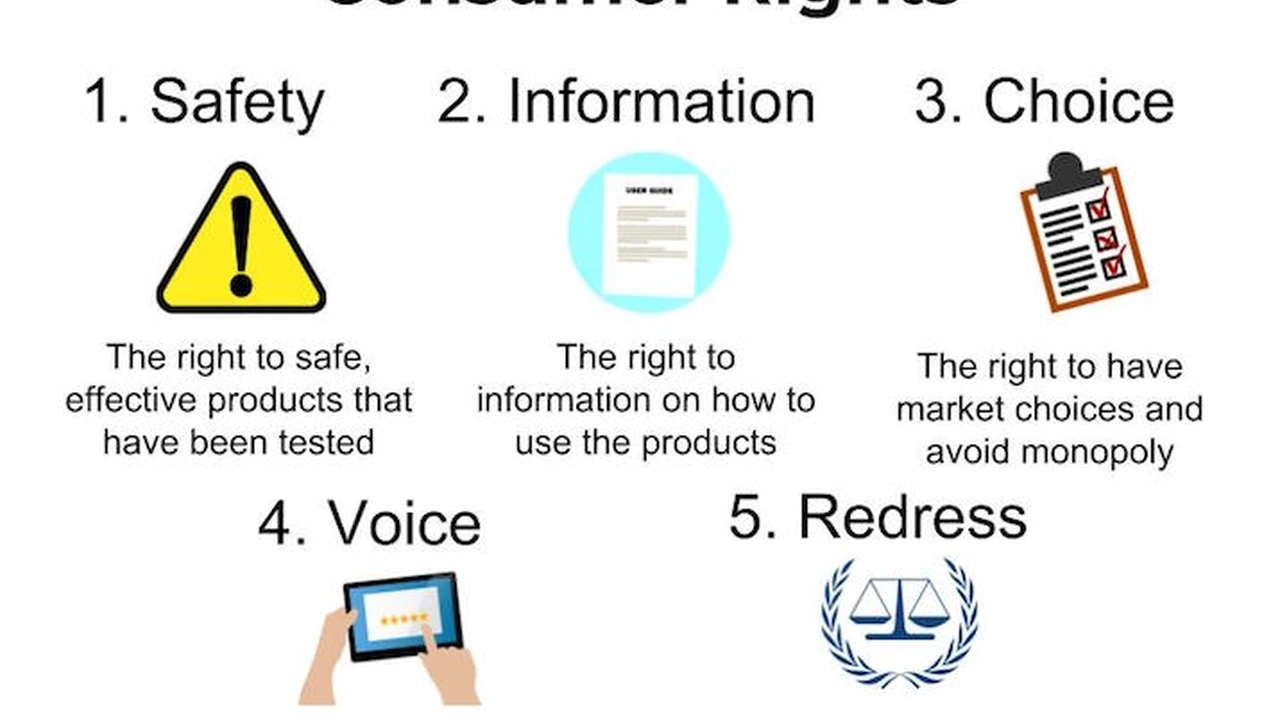
Hey there, savvy shopper! Ever felt like you got the short end of the stick after a purchase? Or maybe you're just curious about what protections you have when buying stuff, whether it's online, in a big box store, or from a local vendor. Well, you've come to the right place! Knowing your consumer rights isn't just for legal eagles; it's for everyone. It empowers you to make informed decisions, stand up for yourself when things go wrong, and ultimately, get a fair deal. This guide will walk you through five absolutely essential consumer rights that apply broadly across the United States and many Southeast Asian countries. While specific laws might vary, the core principles of fairness, safety, and transparency are universal. Let's dive in and make you a more confident consumer!
The Right to Safety Protecting Consumers from Harmful Products
Imagine buying a new gadget, only for it to malfunction dangerously. Or a food product that makes you sick. This is where your right to safety kicks in. This fundamental right ensures that products and services you purchase should not endanger your health or life. Manufacturers and sellers have a responsibility to ensure their offerings are safe for their intended use. This includes everything from the toys your kids play with to the car you drive and the food you eat. In the US, agencies like the Consumer Product Safety Commission (CPSC) are constantly monitoring product safety, issuing recalls, and setting standards. In Southeast Asia, countries like Singapore, Malaysia, and Thailand have their own robust regulatory bodies and consumer protection acts that emphasize product safety. For instance, the Consumer Protection Act 1999 in Malaysia explicitly states that goods supplied to consumers must be safe. Similarly, the Philippines' Consumer Act (Republic Act No. 7394) includes provisions for product quality and safety standards.
Product Recalls and Safety Standards What to Look For
How do you know if a product is safe? Always check for safety certifications and labels. For electronics, look for UL (Underwriters Laboratories) or CE (Conformité Européenne) marks, which indicate compliance with safety standards. For food, check for FDA (Food and Drug Administration) approval in the US, or equivalent national food safety agencies in Southeast Asia (e.g., AVA in Singapore, FDA in the Philippines). Keep an eye on news and official government websites for product recalls. If a product you own is recalled, stop using it immediately and follow the manufacturer's instructions for return or repair. For example, in 2023, there were numerous recalls of children's products due to choking hazards or fire risks. Staying informed is your first line of defense.
The Right to Be Informed Access to Accurate Product Information
Ever bought something only to find out it wasn't quite what you expected because the description was vague or misleading? Your right to be informed means you should have access to accurate, complete, and truthful information about the products and services you intend to buy. This includes details about ingredients, materials, country of origin, instructions for use, potential risks, and pricing. No hidden fees, no deceptive advertising, no vague promises. This right is crucial for making informed purchasing decisions and preventing exploitation. In the US, the Federal Trade Commission (FTC) plays a significant role in preventing deceptive advertising. In Southeast Asia, consumer protection laws in countries like Vietnam (Law on Protection of Consumer Rights) and Indonesia (Consumer Protection Law No. 8 of 1999) mandate clear and honest labeling and advertising practices.
Decoding Labels and Advertisements Avoiding Misleading Claims
Always read the fine print! Don't just rely on flashy headlines. Look for ingredient lists, nutritional information (for food), and detailed specifications (for electronics). Be wary of exaggerated claims like 'miracle cure' or 'guaranteed results' without scientific backing. Compare prices and features across different brands and retailers. For example, when buying a smartphone, don't just look at the camera megapixels; check the processor, RAM, battery life, and software support. Many online retailers now provide detailed product specifications and user reviews, which can be invaluable. If an advertisement seems too good to be true, it probably is. Always cross-reference information from multiple sources before making a significant purchase.
The Right to Choose Freedom to Select Products and Services
Imagine walking into a store and being told you can only buy one specific brand of coffee, even though there are many others available. Or being forced to bundle services you don't need. Your right to choose ensures that you have access to a variety of products and services at competitive prices, allowing you to select what best meets your needs and preferences. This right promotes competition among businesses, which ultimately benefits consumers through better quality, innovation, and lower prices. Monopolies or restrictive practices that limit consumer choice are generally frowned upon and often regulated. Both the US (through antitrust laws) and many Southeast Asian nations (e.g., Competition Act in Singapore, Philippine Competition Act) have legislation to prevent anti-competitive practices that stifle consumer choice.
Comparing Products and Services Making the Best Choice
This is where comparison shopping becomes your superpower! Don't settle for the first option you see. Research different brands, models, and service providers. Read reviews, compare features, and check prices. For example, if you're looking for a new laptop, consider brands like Dell XPS 15 (known for performance and premium build, typically $1500-$2500), Apple MacBook Air M2 (excellent battery life and ecosystem, $1000-$1500), or an Acer Swift 3 (great value for everyday tasks, $600-$900). Each offers different strengths and price points, catering to various user needs. Similarly, when choosing an internet service provider, compare speeds, data caps, contract terms, and customer service ratings from companies like Comcast Xfinity or AT&T in the US, or Singtel or Maxis in Southeast Asia. The more options you explore, the more likely you are to find the perfect fit for your budget and requirements.
The Right to Be Heard Having Your Interests Represented
Ever had a complaint about a product or service and felt like no one was listening? Your right to be heard means that your interests as a consumer should be considered in the formulation and execution of government policies, and that you should have access to effective channels for redress. This right ensures that consumer voices are not ignored and that there are mechanisms for you to express dissatisfaction and seek solutions. It's about having a say and being able to influence decisions that affect you. In the US, consumer advocacy groups like Consumer Reports actively lobby for consumer interests. In Southeast Asia, organizations like the Consumers Association of Singapore (CASE) and the Federation of Malaysian Consumers Associations (FOMCA) provide platforms for consumers to voice their concerns and seek assistance.
Effective Complaint Resolution Steps to Take
If you have a problem, don't just stew about it! First, try to resolve the issue directly with the seller or service provider. Keep detailed records of your purchase, communication, and any attempts at resolution. If that doesn't work, escalate your complaint to higher management. If you're still stuck, consider reaching out to consumer protection agencies or advocacy groups. For example, if you have an issue with a faulty appliance, document the defect with photos or videos, gather your purchase receipt, and contact the retailer or manufacturer's customer service. If they are unresponsive, you might file a complaint with your local consumer affairs department. Many countries also offer mediation or arbitration services as an alternative to court. Remember, your voice matters, and there are avenues to ensure it's heard.
The Right to Redress Seeking Compensation for Damages
What happens when a product is defective, or a service is not delivered as promised, and you suffer a loss? Your right to redress means you have the right to seek compensation for damages incurred due to faulty goods, unsatisfactory services, or unfair practices. This could involve a refund, replacement, repair, or financial compensation. It's about getting justice and being made whole again after a negative consumer experience. This right is a cornerstone of consumer protection, ensuring that businesses are held accountable for their actions and that consumers are not left out of pocket. In the US, small claims courts provide an accessible avenue for consumers to seek redress. In Southeast Asia, many consumer protection acts include provisions for compensation and penalties against businesses that violate consumer rights. For example, the Consumer Protection Act in Thailand allows consumers to claim damages for harm caused by unsafe products.
When to Seek a Refund, Repair, or Replacement Understanding Your Options
Knowing when to ask for what can be tricky. Generally, if a product is significantly faulty or not fit for its intended purpose, you're entitled to a refund or replacement. If the defect is minor, a repair might be offered. Always refer to the retailer's return policy and warranty information. For example, if you buy a new smartphone and it stops working within a week due to a manufacturing defect, you'd typically be entitled to a full refund or a brand-new replacement. If it's a minor software glitch, a repair or software update might be the solution. Keep all receipts, warranty cards, and communication records. If a business refuses to honor your right to redress, you can escalate the issue to consumer protection agencies or, in some cases, pursue legal action. Many credit card companies also offer purchase protection or chargeback options if a merchant fails to deliver on their promises. For instance, if you purchased a Samsung Galaxy S23 (typically $800-$1200) and it developed a critical hardware fault within the warranty period, you would expect a repair or replacement. If a service, like a pre-paid vacation package from a travel agency, was significantly different from what was advertised, you might be entitled to partial or full compensation. Always understand the terms and conditions before making a purchase, especially for high-value items or services.
Understanding these five essential consumer rights is your first step towards becoming a more empowered and protected consumer. Remember, these rights are not just abstract legal concepts; they are practical tools that you can use in your everyday life. So, next time you're making a purchase, whether it's a new pair of shoes, a subscription service, or a major appliance, remember your rights. Be informed, be safe, and don't hesitate to speak up if something isn't right. Happy shopping!
:max_bytes(150000):strip_icc()/277019-baked-pork-chops-with-cream-of-mushroom-soup-DDMFS-beauty-4x3-BG-7505-5762b731cf30447d9cbbbbbf387beafa.jpg)