3 Key Things to Know About Trade Secrets Protection
Essential information and legal considerations for safeguarding your valuable trade secrets.
Essential information and legal considerations for safeguarding your valuable trade secrets.
3 Key Things to Know About Trade Secrets Protection
Hey there! Ever wondered how companies keep their secret sauce, literally or figuratively, under wraps? We're talking about trade secrets – those super valuable pieces of information that give a business a competitive edge. Think Coca-Cola's formula, Google's search algorithm, or even a unique customer list. Unlike patents or copyrights, trade secrets aren't registered with the government. Their protection comes from keeping them secret! But what does that really mean for you, whether you're a business owner, an inventor, or just curious? Let's dive into three crucial things you absolutely need to know about trade secret protection, covering both the US and Southeast Asian contexts.
Understanding What Qualifies as a Trade Secret Definition and Examples
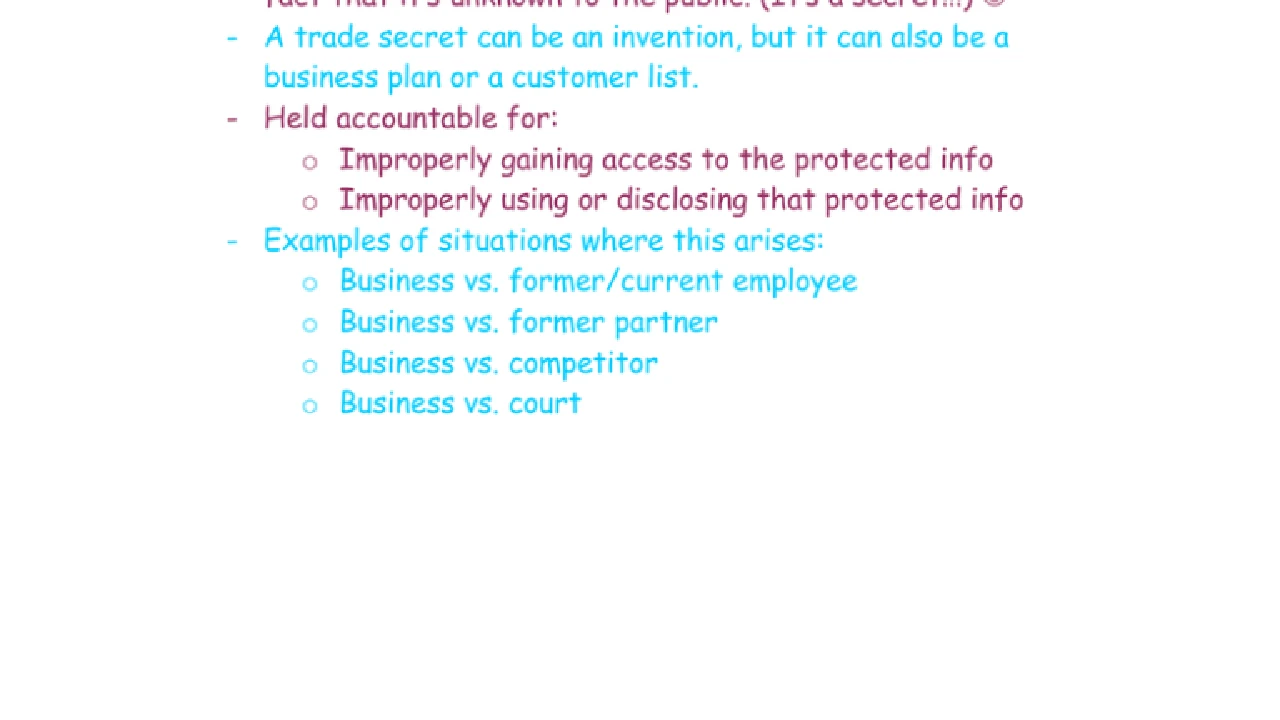
First things first, what exactly is a trade secret? It's not just any secret. For information to qualify as a trade secret, it generally needs to meet three main criteria:
- It must be secret: This means it's not generally known to the public or to those who can obtain economic value from its disclosure or use. If everyone knows it, it's not a secret.
- It must have commercial value because it is secret: This is key. The information provides a business with an economic advantage over competitors who don't know or use it.
- The owner must have taken reasonable steps to keep it secret: This is where the rubber meets the road. You can't just say something is a trade secret; you have to actively protect it.
Let's look at some common examples:
- Formulas and Recipes: The classic example is the Coca-Cola formula. KFC's 11 herbs and spices? Also a trade secret.
- Manufacturing Processes: A unique way a company produces a product that makes it cheaper, faster, or higher quality.
- Customer Lists and Data: A carefully curated list of clients, especially with their preferences or purchasing habits, can be incredibly valuable.
- Business Plans and Strategies: Future product development plans, marketing strategies, or expansion plans.
- Software Algorithms and Source Code: Specific algorithms that power a unique feature or improve efficiency.
- Negative Information: Even knowing what doesn't work can be a trade secret, saving a company time and money on failed experiments.
In the US, the Uniform Trade Secrets Act (UTSA), adopted by most states, and the Defend Trade Secrets Act (DTSA) at the federal level, provide the legal framework. In Southeast Asia, countries like Singapore, Malaysia, and Thailand have their own specific laws or rely on common law principles to protect trade secrets, often aligning with international standards set by agreements like TRIPS (Agreement on Trade-Related Aspects of Intellectual Property Rights). While the specifics might vary, the core principles of secrecy, commercial value, and reasonable protection efforts remain consistent.
Implementing Robust Measures for Trade Secret Protection Best Practices and Tools
So, you've got something valuable. How do you actually keep it secret? This isn't about magic; it's about implementing practical, robust measures. Remember, if you don't take reasonable steps, a court might decide it's not a trade secret at all!
Legal Agreements and Policies for Trade Secret Security
This is your first line of defense. You need clear, legally binding documents:
- Non-Disclosure Agreements (NDAs): These are crucial. Anyone who gets access to your trade secrets – employees, contractors, potential partners, investors – should sign an NDA. Make sure it clearly defines what constitutes confidential information, the obligations of the recipient, and the duration of the agreement.
- Employment Agreements: Include clauses that specify an employee's duty to maintain confidentiality, especially after they leave the company. Non-compete clauses (where legally enforceable) can also play a role, preventing former employees from immediately working for a direct competitor and using your secrets.
- Company Policies: Develop and enforce clear internal policies regarding confidential information. This includes guidelines on handling sensitive documents, using company devices, and communicating proprietary information.
Physical and Digital Security for Confidential Information
Beyond legal documents, you need practical security measures:
- Access Control: Limit access to trade secrets on a 'need-to-know' basis. Not everyone in the company needs to see the secret formula. This applies to physical documents (locked cabinets, restricted areas) and digital files (password protection, user permissions).
- Marking Confidential Information: Clearly label documents, files, and even emails containing trade secrets as 'Confidential' or 'Proprietary.' This serves as a constant reminder to those who have access.
- Secure Storage: For physical documents, use locked safes or secure rooms. For digital data, employ strong encryption, secure servers, and cloud storage solutions with robust security features. Regularly back up your data!
- Employee Training: Regularly train your employees on what constitutes a trade secret, their obligations under NDAs and company policies, and best practices for handling confidential information.
- Exit Interviews: When an employee leaves, conduct an exit interview to remind them of their ongoing confidentiality obligations and ensure they return all company property.
Technology Solutions for Enhanced Trade Secret Protection
In today's digital world, technology is your friend in protecting trade secrets. Here are some types of products and services that can help:
1. Data Loss Prevention (DLP) Software
What it does: DLP solutions monitor, detect, and block sensitive data from leaving your organization's control. They can prevent employees from emailing confidential files, uploading them to unauthorized cloud services, or copying them to USB drives.
Use Cases: Preventing source code leaks, stopping customer lists from being exfiltrated, ensuring compliance with data privacy regulations.
Comparison and Products:
- Symantec DLP: A comprehensive, enterprise-grade solution. Offers broad coverage across endpoints, networks, and cloud. Known for its robust policy enforcement and detailed reporting. Typically higher cost, suited for larger organizations with complex needs.
- McAfee DLP: Another strong contender, offering similar features to Symantec. Integrates well with other McAfee security products. Good for organizations already in the McAfee ecosystem.
- Forcepoint DLP: Focuses on human-centric security, understanding user behavior to identify and prevent data loss. Strong in cloud and web security integration.
- Endpoint Protector by CoSoSys: Often praised for its ease of use and cross-platform support (Windows, macOS, Linux). Good for mid-sized businesses looking for effective endpoint DLP without extreme complexity. Pricing is usually subscription-based, varying by number of endpoints.
Estimated Pricing: Enterprise DLP solutions can range from $50-$200+ per user per year, or custom quotes for large deployments. Smaller, more focused solutions might start lower.
2. Secure Document Management Systems (DMS)
What it does: These systems provide a centralized, secure repository for all your documents, with granular access controls, versioning, and audit trails. They ensure that only authorized personnel can view, edit, or share sensitive information.
Use Cases: Storing R&D documents, legal contracts, financial reports, and strategic plans. Ensuring compliance and easy retrieval of documents.
Comparison and Products:
- Microsoft SharePoint: Widely used, especially by organizations already on Microsoft 365. Offers robust document management, collaboration, and security features. Can be complex to set up and manage for advanced use cases. Included in many Microsoft 365 business subscriptions (e.g., Business Standard starts around $12.50/user/month).
- Google Drive Enterprise: Similar to SharePoint, integrated with Google Workspace. Excellent for collaboration and cloud-native environments. Strong security features and easy sharing controls. Part of Google Workspace plans (e.g., Business Standard starts around $12/user/month).
- DocuWare: A dedicated DMS solution known for its workflow automation, strong security, and integration capabilities. Often used by businesses looking to digitize and automate document processes. Pricing is typically custom, based on features and users.
- M-Files: Unique in its metadata-driven approach, which helps organize documents based on 'what' they are rather than 'where' they are stored. Excellent for complex information management and compliance. Custom pricing.
Estimated Pricing: Varies widely. Cloud-based solutions often have per-user monthly fees, starting from $10-$50 per user, depending on features and storage.
3. Identity and Access Management (IAM) Solutions
What it does: IAM systems manage digital identities and control user access to resources. This includes single sign-on (SSO), multi-factor authentication (MFA), and granular permission management, ensuring only authorized individuals can access specific systems or data.
Use Cases: Controlling who can access your internal network, specific applications, or sensitive databases. Preventing unauthorized access even if passwords are stolen.
Comparison and Products:
- Okta: A leading cloud-based IAM provider. Offers robust SSO, MFA, and lifecycle management. Known for its ease of integration with thousands of applications. Pricing is modular, starting from around $2-$6 per user per month for basic features, scaling up for advanced capabilities.
- Microsoft Azure Active Directory (Azure AD): Microsoft's cloud-based directory and identity management service. Essential for organizations using Azure or Microsoft 365. Offers SSO, MFA, and conditional access. Basic features included with Microsoft 365 subscriptions; premium tiers offer advanced security (e.g., P1 around $6/user/month).
- Ping Identity: Another strong enterprise IAM solution, offering a comprehensive suite of identity services. Good for hybrid environments and complex security needs. Custom pricing.
- LastPass Enterprise: While primarily a password manager, its enterprise version offers SSO and MFA capabilities, making it a good entry-level IAM solution for smaller businesses. Starts around $6/user/month.
Estimated Pricing: Can range from a few dollars per user per month for basic features to $10-$20+ for advanced enterprise solutions.
4. Employee Monitoring Software
What it does: These tools track employee activity on company devices, including website visits, application usage, email content, and file transfers. While controversial, they can be a deterrent against intentional or accidental data leaks.
Use Cases: Identifying suspicious activity, ensuring compliance with company policies, investigating potential data breaches. (Note: Always be mindful of privacy laws and ethical considerations when deploying such tools).
Comparison and Products:
- Teramind: Offers comprehensive employee monitoring, DLP, and insider threat detection. Records user sessions, monitors emails, chats, and file transfers. Strong analytics and alerting. Pricing starts around $10-$20 per user per month.
- ActivTrak: Focuses on workforce analytics and productivity monitoring, but also includes features for identifying risky behavior and data exfiltration attempts. Cloud-based and easy to deploy. Pricing starts with a free tier for basic use, paid plans from around $9/user/month.
- InterGuard: Provides a full suite of monitoring tools, including web and email monitoring, keylogging, and remote control. Strong for forensic investigations. Custom pricing.
Estimated Pricing: Typically $8-$25 per user per month, depending on features and scale.
Remember, the best approach often involves a combination of these tools and strategies. No single solution is a silver bullet. Regularly review and update your security measures as your business evolves and threats change.
Navigating Trade Secret Misappropriation Legal Recourse and International Considerations
Even with the best protection, trade secret misappropriation can happen. This is when someone acquires, discloses, or uses your trade secret without your consent, often through improper means (like theft, bribery, or breach of an NDA). Knowing your legal options is crucial.
Legal Actions in the US for Trade Secret Theft
In the United States, you have powerful tools at your disposal:
- Defend Trade Secrets Act (DTSA): This federal law, enacted in 2016, allows trade secret owners to sue in federal court. It provides for remedies such as injunctions (court orders to stop the misappropriation), damages (financial compensation for losses), and in some cases, even exemplary damages (punitive damages) and attorney's fees. It also includes provisions for ex parte seizure orders in extraordinary circumstances, allowing law enforcement to seize stolen trade secrets before they can be disseminated.
- Uniform Trade Secrets Act (UTSA): Most states have adopted some version of the UTSA. This state-level legislation offers similar remedies to the DTSA. Often, plaintiffs will bring claims under both federal and state law.
- Criminal Penalties: The Economic Espionage Act (EEA) makes the theft of trade secrets a federal crime, punishable by significant fines and imprisonment. This is typically pursued by federal prosecutors, not private companies.
Trade Secret Protection in Southeast Asia Regional Differences
The landscape in Southeast Asia is a bit more varied, but the trend is towards stronger protection:
- Singapore: Has robust trade secret protection under common law and specific statutes. Courts are generally sophisticated in handling complex IP disputes. NDAs are highly enforceable.
- Malaysia: Relies on common law principles of breach of confidence. The Malaysian courts recognize and protect trade secrets, and NDAs are crucial.
- Thailand: The Trade Secrets Act B.E. 2545 (2002) provides specific statutory protection. It defines trade secrets and outlines remedies for misappropriation, including injunctions and damages.
- Indonesia: The Law on Trade Secrets No. 30 of 2000 provides a legal framework. Enforcement can sometimes be challenging, but the legal basis exists.
- Philippines: Protection is primarily under the Intellectual Property Code, which includes provisions for unfair competition and breach of contract (like NDAs).
- Vietnam: The Intellectual Property Law includes provisions for trade secret protection, often relying on contractual agreements and unfair competition principles.
Key Considerations for International Trade Secrets:
- Jurisdiction: If your trade secret is misappropriated across borders, determining the correct jurisdiction for legal action can be complex. You might need to pursue action in multiple countries.
- Enforcement: While laws exist, the efficiency and effectiveness of enforcement can vary significantly between countries.
- Choice of Law: Ensure your NDAs and other agreements specify which country's laws will govern the agreement. This is vital for international dealings.
- Cultural Nuances: Be aware of cultural differences in business practices and legal interpretations that might impact trade secret protection.
In both the US and Southeast Asia, the burden of proof often falls on the trade secret owner to demonstrate that the information qualifies as a trade secret, that reasonable steps were taken to protect it, and that misappropriation occurred. This is why meticulous documentation of your protection efforts is so important.
Protecting your trade secrets is an ongoing process, not a one-time event. It requires a combination of legal foresight, technological solutions, and consistent vigilance. By understanding what qualifies as a trade secret, implementing robust protection measures, and knowing your legal recourse, you can significantly safeguard your valuable intellectual assets and maintain your competitive edge.
:max_bytes(150000):strip_icc()/277019-baked-pork-chops-with-cream-of-mushroom-soup-DDMFS-beauty-4x3-BG-7505-5762b731cf30447d9cbbbbbf387beafa.jpg)